

TACCS Projects and events
TACCS implements an array of projects and other activities with support from members, development partners and own initiatives.


Enhancing the Adoption of Clean Cooking Solutions in Tanzania supported more than 1000 households to adopt clean cooking
January 2026
The project implemented by the Tanzania Association of Clean Cooking Stakeholders (TACCS) with support from Shell Foundation and GIZ, has achieved strong progress across multiple result areas. The project significantly exceeded its household clean cooking adoption target by reaching 1,142 households against a target of 500, through the sale and distribution of 30 Electric Pressure Cookers and induction stoves, 3 LPG stoves, and 1,455 Improved Cook Stoves (ICS). Business development support also surpassed expectations, with 8 start-ups and MSMEs strengthened against a target of 6, including ICS producers, briquette enterprises, and distributors in Mwanza, Geita, and Mara, thereby expanding market access and enterprise capacity. In skills development, 46 beneficiaries completed vocational training out of a target of 63, including 37 women and 27 youth, while 3 labour-market-oriented and gender-sensitive training programmes were successfully developed as planned. The project also exceeded its enterprise engagement target, with 8 companies participating in job-matching initiatives against a target of 6, facilitating internships, mentorships, and practical placements for trainees in Kibaha, Geita, and Mwanza. Employment outcomes were moderate but promising, with 44 people securing jobs and 28 individuals reporting improved employment situations, including income gains and better working conditions. Overall, the project has demonstrated substantial success in accelerating clean cooking adoption, strengthening green enterprises, enhancing vocational skills, and creating pathways for inclusive green jobs in Tanzania.
Needs Assessment to sustain Matawi Stove Producers in Tanzania by EN-DEV and SNV
The needs assessment aims to evaluate and sustain Matawi stove producers in Tanzania under the EnDev–SNV program by establishing their current operational, technical, and market status, identifying key gaps affecting their long-term viability beyond project support, and assessing their readiness for independent growth. The assessment will also include testing Matawi stoves for compliance with Tanzania clean cooking standards, diagnosing technical deficiencies where non-compliance is identified, and recommending targeted capacity-building interventions—such as design improvements, production optimization, and quality control measures to ensure producers can meet standards, enhance competitiveness, and maintain sustainable operations post-project.


With TANGSEN, conduct capacity building for women to participate and benefit from the clean cooking value chain.
In collaboration with TANGSEN, the initiative aims to capacitate women along the clean cooking value chain by enabling their active participation in clean cooking activities and businesses through targeted training and awareness creation. This includes identifying women in the Lake Zone and Coastal Zone, equipping them with skills in stove manufacturing, and supporting them to showcase and market their products, thereby enhancing their economic opportunities and contribution to the clean cooking sector.
Enhancing the Adoption of Clean Cooking Solutions in Tanzania Project
2024 -2026
The project aims to contribute to the transformation of the clean cooking industry of Tanzania through increased use of clean cooking solutions thereby reducing air pollution, reducing deforestation, mitigating health issues, reducing environmental degradation, reducing unpaid care works, improving poverty reduction, and cooking ergonomics. Crucially, the project focuses to enhance adoption of clean cooking solutions in at least 500 households and at least 10 institutions while also creating at least 100 decent jobs to among others women and youth by supporting and developing a comprehensive clean cooking value chain in the project areas. Among others the clean cooking value chain include the production of improved cook stoves and briquettes, distribution of the later, importation and distribution of e-cooking solutions, biofuels, capacity building (training, awareness, networking), storage, raw material supply, and marketing.

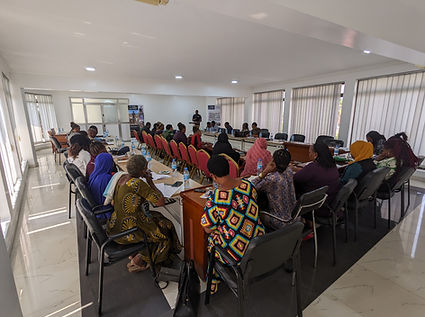
Launching of TACCS women chapter
26th July 2024 in Dar es Salaam
Launching of TACCS - Women Chapter was organized in close collaboration with key strategic partners specifically, SNV, UN Women, and TANGSEN, who share the goal of empowering women to seize opportunities in clean cooking initiatives. Women Chapter brings together women from various levels (government, private sector, civil Society Organization, and individuals) to discuss, brainstorm, and generate ideas for further engagement in empowering women and girls along the clean cooking value chains (SDG5). This first women’s meeting under TACCS will mark the formation of a more organized platform, creating a collective voice for women not only as manufacturers and entrepreneurs with qualified tested products but also as important players in the market, particularly in the carbon market value chains for mitigation and reduction. The meeting was conducted on 26th July in Dar es Salaam and attended by 30 participants.
Advocacy at international level at the Summit on Clean Cooking in Africa
14 May 2024 Paris, France
Chairman of TACCS, participated in the conference, where close to 60 countries, as well as companies and development institutions, gather in Paris to channel unprecedented resources towards addressing a challenge affecting huge numbers of women and children The first ever high-level Summit focused on providing clean cooking access to the more than 1 billion people in Africa who currently lack it has delivered a breakthrough financial commitment for addressing one of the world’s most persistent and deep-seated inequalities. Co-chaired by the leaders of the governments of Tanzania and Norway, and the African Development Bank and the International Energy Agency, the Summit on Clean Cooking in Africa has mobilised USD 2.2 billion in financial pledges from governments and the private sector. Close to 60 countries are taking part in the Summit, with over 1,000 delegates in attendance. President Emmanuel Macron of France is hosting a special session for heads of state and other leaders at the Elysée Palace on the occasion of the Summit. The tools for enabling clean cooking access are readily available and affordable – and can have a profound impact on the lives of people across Africa and beyond. But progress in many African countries has significantly lagged what has been seen in other regions in recent decades. Today’s Summit is the first time that such a large amount has been dedicated to clean cooking access at a single gathering, with the potential to make 2024 a turning point on an issue that has been overlooked for too long. The pledges made at the Summit come on top of other recent commitments including that of the African Development Bank at COP28 in Dubai. Lack of access to clean cooking affects over 2 billion people worldwide. More than half are in Africa, typically cooking over open fires and basic stoves. Using charcoal, wood, agricultural waste, and animal dung as fuel, they inhale harmful toxic fumes and smoke with dire consequences for health. It is the second leading cause of premature death in Africa. Women and children account for most of the lives lost, the vast majority of them in sub-Saharan Africa. Opportunities for education, employment and independence are limited because women instead spend hours each day foraging for rudimentary fuels. President Samia Suluhu Hassan of Tanzania said: “Ensuring clean cooking access for all in Africa needs adequate, affordable, and sustainable financing for appropriate solutions and innovations; adequate global attention; and smart policies and partnerships. Successfully advancing the clean cooking agenda in Africa would contribute towards protecting the environment, climate, health, and ensuring gender equality. This Summit underscores our commitment to advancing this agenda and providing a framework towards universal adoption of clean cooking fuels and technologies across the continent.” Prime Minister Jonas Gahr Støre of Norway said: “Improving access to clean cooking is about improving health outcomes, reducing emissions, and creating opportunities for economic growth. With today’s Summit, we have mobilized much needed support, and built a diverse partnership that together can make a real difference. Norway is a steadfast supporter of clean cooking, and I was pleased to announce today that we are committed to investing approximately USD 50 million in this important cause.” IEA Executive Director Fatih Birol said: “This Summit has delivered an emphatic commitment to an issue that has been ignored by too many people, for too long. We still have a long way to go, but the outcome of this Summit, USD 2.2 billion committed, can help support fundamental rights such as health, gender equality and education while also reducing emissions and restoring forests. And the commitments announced today go beyond the money alone – they set out concrete steps on how governments, institutions and the private sector can work together to solve the clean cooking challenge this decade. I’m proud of the IEA’s decades of work on this issue and of its leadership in initiating this groundbreaking Summit. Going forwards, we will rigorously track the commitments announced today to make sure they’re met on time and in full – and continue to do our utmost to bring greater resources and attention to this critical issue.” African Development Bank Group President Akinwumi A. Adesina said: “At the African Development Bank, we are delighted to play a leading role alongside the International Energy Agency (IEA), Tanzania and Norway, to definitively tackle lack of access to clean cooking, that affects a billion people in Africa. In concert with countries, we will increase our financing for clean cooking to USD 200 million annually over the next decade, while also scaling-up the provision of blended finance for clean cooking through the Sustainable Energy Fund for Africa (SEFA).” Following the summit, the IEA will employ a “double-lock system” to ensure that momentum behind clean cooking does not slow in the coming months and years. The agency will focus efforts on two areas. First, by using effective methods to ensure that pledges and commitments are fulfilled, tracking them carefully to make sure the money is spent in a timely manner and reaches those in need. Second, the IEA will continue to play a convening role to engage more willing partners and generate new funds to help meet the USD 4 billion a year in capital investments required between now and 2030. Reaching this level of funding would enable the world to deploy the stoves and fuel delivery infrastructure needed to reach universal access to clean cooking in sub-Saharan Africa. Success stories from other regions demonstrate that rapid and transformative progress on clean cooking is achievable. Similar innovative approaches are now required in countries across Africa. Leaders at the Summit all highlighted that now is the time to show endeavour by fixing this problem once and for all. At the Summit, more than 100 countries, international institutions, companies and civil society organisations also endorsed The Clean Cooking Declaration, pledging to make the issue a priority and enhancing efforts toward achieving universal access for all. SOURCE: https://www.iea.org/news/landmark-summit-mobilises-2-2-billion-to-make-2024-a-turning-point-for-clean-cooking-access-in-africa


Training to members to apply for a second round of call for the Modern Cooking Facility for Africa (MCFA) new funding round.
10th January 2024, Dar es Salaam
TACCS conducted in a hybrid training to its members to support them to apply for the second round onModern Cooking Facility for Africa (MCFA) new funding round. Participants both on-site and online, featured Emma Yrjölä and her NEFCO colleagues presenting on the second round of funding by MCFA. They covered the opportunity's background, minimum participation requirements, and the application process. The meeting was attended by 11 people online on top of the one in the venue, some of the attendees included representatives from UN Women, the EU, and private companies in the cooking technologies business. Audience feedback, in the form of questions and comments, focused on the MCFA funding opportunity.
Upishi Bora, Punguza kazi Bila malipo Project
October-December 2023, Singida
To investigate the correlation between the burden of unpaid care work, specifically in cooking, among women, UN Women, TACCS and TANGSEN executed the Upishi Bora, Punguza Kazi Bila Malipo in the Singida region, Ikungi district. The primary objective was to enhance awareness within the community, as well as among leaders and decision-makers, regarding the recognition, reduction, and equitable distribution of the unpaid care work burden associated with cooking. To fulfill this goal, the project employed several approaches. Firstly, a rapid assessment of unpaid care work along the cooking value chain was conducted. Concurrently, efforts were made to promote the adoption of clean cooking stoves within rural households in the project villages. Subsequently, the project facilitated local-level policy dialogues with district officials and community leaders. The aim was to augment their comprehension of unpaid care work, particularly in the context of cooking, and underscore their pivotal role in planning and implementing interventions to alleviate the time burden on women. As a tangible outcome of these efforts, more than two hundred (200) households successfully acquired clean cooking stoves. Moreover, 18 women entrepreneurs underwent training and received support to become distributors and local manufacturers of clean cooking stoves. This multifaceted approach not only contributed to addressing the immediate challenges related to unpaid care work but also empowered women to venture into clean cooking value chains as entrepreneurs, and fostered sustainable solutions within the community.


Mapping of Stakeholders mission in Tanzania
January - September 2023
In order to be able to achieve its above objectives, TACCS management among otherss, it has to make sure that it is known among strategic authorities and key players in and outside the country and at the same time to know and introduce itself to key players, what are they doing, where are they located, what are could be their challenges, what are available opportunities for them, and what can be done to raise the reputation of cooking sub-sector as the main consumer of energy in the country. As such, TACCS conducted mapping missions in Dodoma, Kilimanjaro, Mwanza, Pwani, Iringa, Mbeya and Arusha in the first quarter of 2023. TACCS embarked on its first mission for mapping key stakeholders and actors, the mapping started in their engagements, challenges and opportunities assessment. The assignment aimed at identifying clean cooking stakeholders in the Southern Highland zone in General. Furthermore, the focus was also to introducing TACCS to the potential members and give them brief information about the association
With TANGSEN, conduct capacity building for women to participate and benefit from the clean cooking value chain.
In collaboration with TANGSEN, the initiative aims to capacitate women along the clean cooking value chain by enabling their active participation in clean cooking activities and businesses through targeted training and awareness creation. This includes identifying women in the Lake Zone and Coastal Zone, equipping them with skills in stove manufacturing, and supporting them to showcase and market their products, thereby enhancing their economic opportunities and contribution to the clean cooking sector.